What is branded workwear?
Branded workwear is clothing that has been customised with a company logo, name, slogan, or other design. It is used by businesses to create a consistent, professional appearance for their staff. The customisation is usually applied through embroidery or one of several printing methods. Garments range from practical items like hi-vis vests and waterproof jackets to more casual options like polo shirts, hoodies, and T-shirts.
Why do businesses use branded workwear?
There are several practical reasons businesses invest in branded clothing. It makes staff easy to identify, which is important in customer-facing roles and on worksites. It promotes the company when staff are out and about. It can help create a sense of team identity. For some industries, specific garments also meet safety requirements. In short, branded workwear can serve both a practical and a promotional purpose at the same time.
What types of businesses use branded workwear?
A very wide range of businesses and organisations use branded workwear. Common examples include:
- Construction and trade companies (builders, plumbers, electricians, landscapers)
- Hospitality businesses (restaurants, hotels, bars, cafes)
- Retail shops and supermarkets
- Healthcare and care services
- Schools, colleges, and universities
- Sports clubs and leisure organisations
- Charities and voluntary groups
- Corporate and office-based businesses
If your team wears any kind of clothing as part of their role, it is worth considering whether branded versions would be beneficial.
Embroidery and Printing
What is the difference between embroidery and printing?
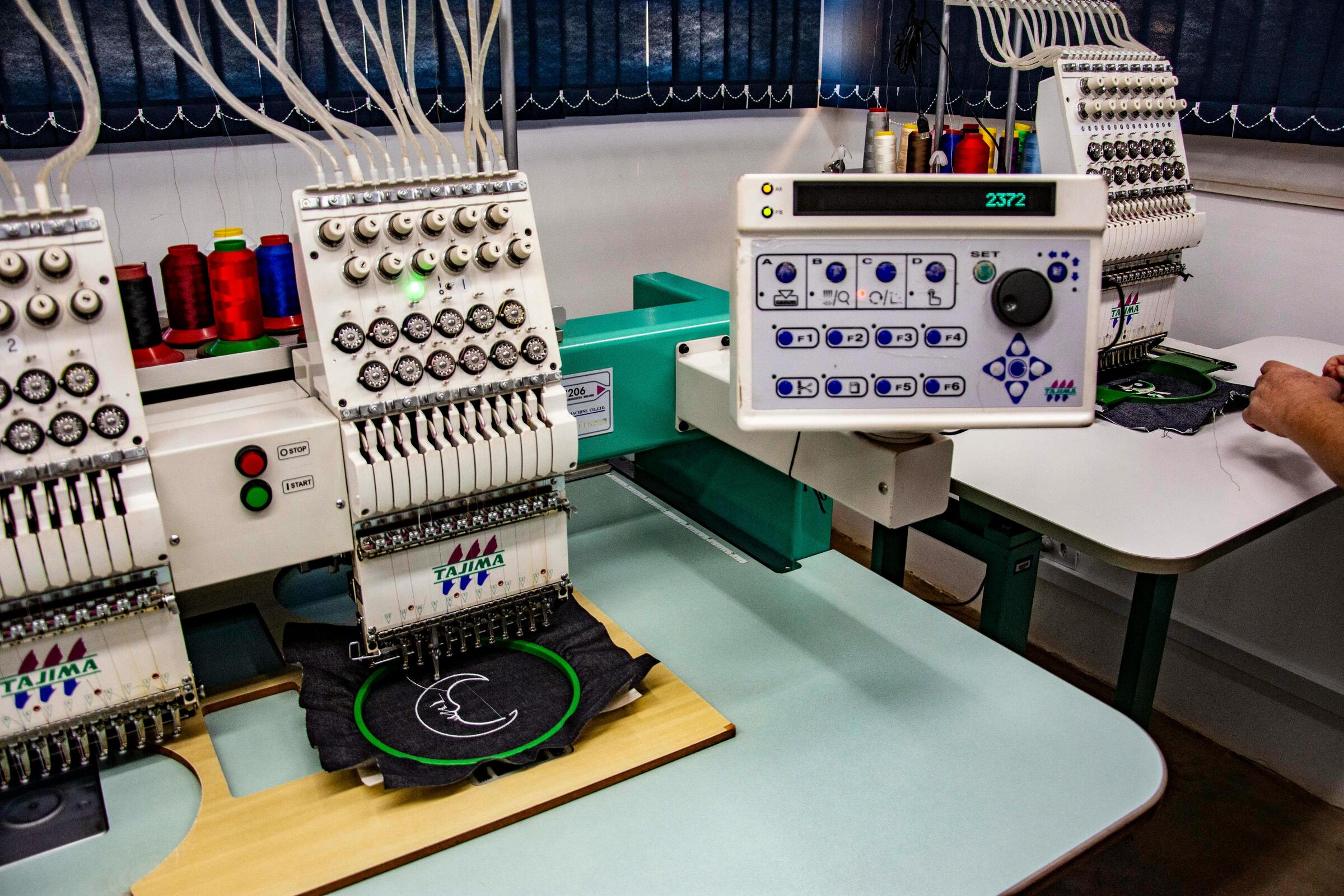
Embroidery uses a specialist machine to stitch a design directly into the fabric using thread. Printing transfers a design onto the surface of the fabric using ink or heat. Embroidery tends to look more premium and is very durable, making it popular for polo shirts, fleeces, and jackets. Printing can handle more complex artwork including photographs and gradients, and is often more cost-effective for larger quantities of simpler garments such as T-shirts.
Which method is better for workwear?
It depends on the garment, the design, and the intended use. For durable, everyday workwear that will be washed frequently, embroidery is usually the preferred choice as it does not fade or crack the way some prints can over time. For promotional clothing, event T-shirts, or garments where the design includes a lot of colour or fine detail, printing is often the better fit. We can advise on the most appropriate method for your specific order.
Can you embroider any logo?
Most logos can be embroidered, but designs with very fine lines, tiny text, or photographic elements may not translate well into stitching. Before embroidering a new design, a process called digitising takes place, where the artwork is converted into a stitch file that the embroidery machine can read. If your logo has complex elements, we can let you know whether any adjustments would be needed.
Garments
What garments can be branded?
Almost any fabric garment can be branded. Common choices include polo shirts, T-shirts, sweatshirts, hoodies, fleeces, softshell jackets, waterproof jackets, hi-vis vests and jackets, aprons, caps, and beanies. The right garment depends on the environment your staff work in, the look you want to achieve, and your budget.
Do you supply hi-vis clothing?
Yes. Hi-vis vests, jackets, and trousers are available in both standard and enhanced visibility ratings. These can be branded with embroidery or print, depending on the garment and the placement of the branding. If your team works in environments where high-visibility clothing is required, we can help you find compliant options with your logo added.

3 responses
This is exactly what i was looking for, thank you so much for these tutorials
It would be great to try this theme for my businesses
What a nice article. It keeps me reading more and more!